
Search Arkansas Unclaimed Money
Arkansas holds more than $400 million in unclaimed money that belongs to residents who lost touch with old bank accounts, insurance policies, utility deposits, and other financial assets. The state runs a free search at claimitar.gov, where you can type your name and find out if any funds are waiting for you. About one in four Arkansans has something in the system, which is a higher rate than most states. If you have lived here, worked here, or had a policy or account tied to Arkansas, it is worth a quick search to see what might be yours.
Arkansas Unclaimed Money at a Glance
The Great Arkansas Treasure Hunt
The Great Arkansas Treasure Hunt is the official name for Arkansas's unclaimed money program. The Office of Auditor of State runs it from the Victory Building in downtown Little Rock. The program collects financial assets that go unclaimed, holds them in trust, and returns them to rightful owners free of charge. There is no deadline to file a claim. The state holds property indefinitely until someone comes forward. You can reach the office by phone at (501) 682-6000, or toll-free at 1-800-CLAIMIT, which is 1-800-252-4648. Claimants can email claimit@auditor.ar.gov, and businesses that need to report unclaimed assets can write to holders@auditor.ar.gov. The office is at 1401 W. Capitol Avenue, Suite 325, Little Rock, AR 72201.
On February 1, 2024, the state moved its search portal from the old claimitAR.com address to the new domain at claimitar.gov. Governor Sarah Huckabee Sanders declared that date Unclaimed Property Day in Arkansas. The reason for the move was straightforward. The search process requires you to enter your Social Security number, and many Arkansans had asked whether the old site was real. Common questions included "Is this a scam?" The .gov domain answers that directly. It means the site is an official government resource, and that matters when sensitive data is involved.
The Arkansas Auditor of State's unclaimed property page outlines all the program functions in detail, including how assets get transferred from holders to the state and how claims are processed once filed.
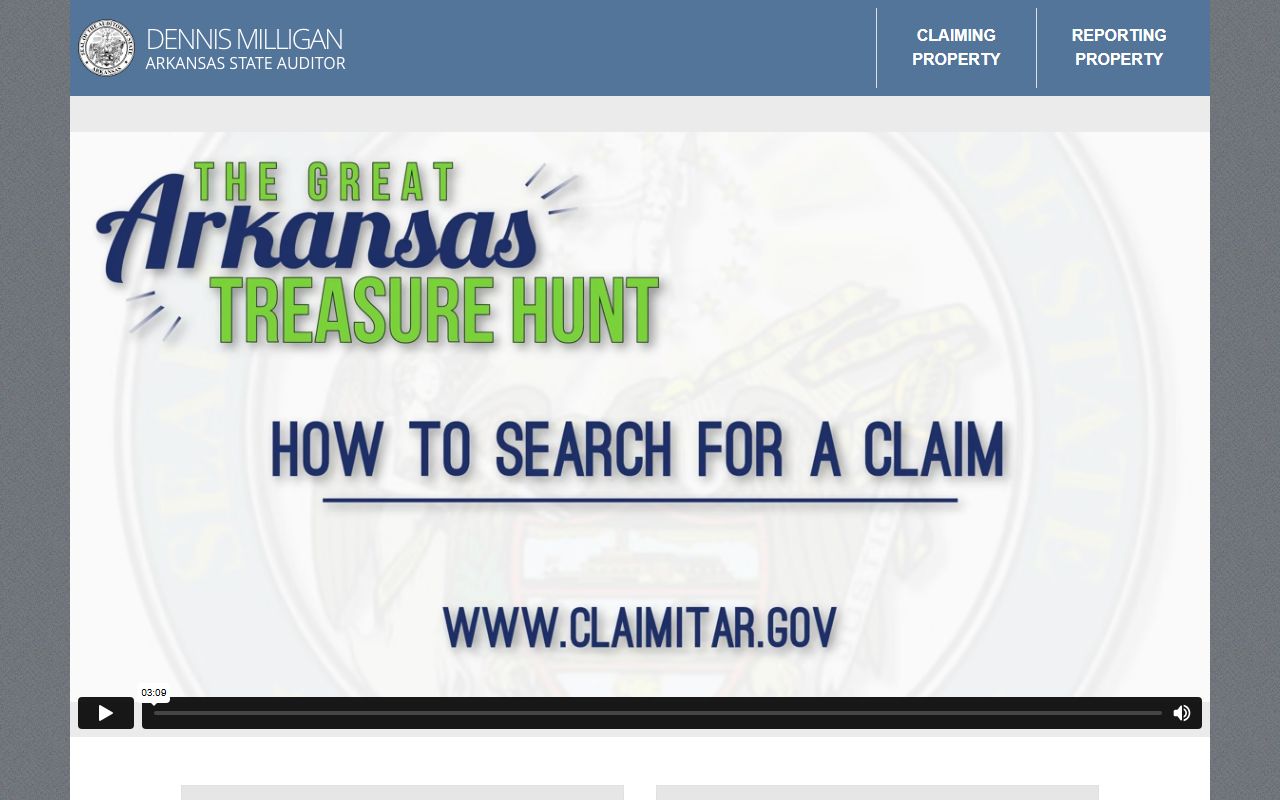
The Auditor's office manages the Unclaimed Property Proceeds Trust Fund and handles everything from dormant bank accounts to tangible items left in unpaid safe deposit boxes.
The Arkansas Counties Association covered the Great Arkansas Treasure Hunt website launch, explaining how the shift to a .gov address improves public confidence and helps more residents feel comfortable starting a claim.
County governments across the state supported the change, recognizing that hesitation about website legitimacy had kept some residents from filing claims they were owed for years.
Talk Business and Politics reported on the website migration, noting it happened on National Unclaimed Property Day and that the Auditor's office used the occasion to highlight how many Arkansans still had funds waiting.

The article noted that the Auditor's office gets frequent calls from residents who received pre-notification letters and weren't sure the letters were real, a problem the .gov domain move was designed to solve.
How to Search Arkansas Unclaimed Money
Searching is free. Go to claimitar.gov and type your name into the search bar. The database returns any matches for that name. You can also search by business name if you are looking for corporate funds. Results show the type of property, the name of the holder who reported it, and sometimes the dollar amount depending on what the state has disclosed. Searching does not start a claim. It only shows you what is in the system.
Once you find a property that looks like yours, you open a claim online. The portal lets you upload supporting documents from your device. Common items include a government-issued ID, a bill or bank statement showing your current address, and any records that tie you to the property. Old tax returns can show employment with a past employer. A copy of an insurance policy can confirm you are the named beneficiary. After you submit, the system sends a confirmation with a case number. You can use that number to check claim status at any time, or wait for email updates the system sends automatically.
Identity checks happen online in most cases, which has reduced the need for notarized documents compared to how things used to work. The office also offers a short video tutorial on the Auditor's website that walks you through each step. If you get stuck, call the toll-free helpline at 1-800-252-4648. Staff can help with questions about the process, missing documents, or claim status.
If you have lived in other states, also check MissingMoney.com. This national database is run by the National Association of Unclaimed Property Administrators and pulls results from all participating states at once. Arkansas takes part in it. One search at MissingMoney can surface holdings across multiple states at the same time, which saves a lot of effort if you have moved around over the years.
The claimitar.gov portal is the starting point for any Arkansas unclaimed money search or claim.
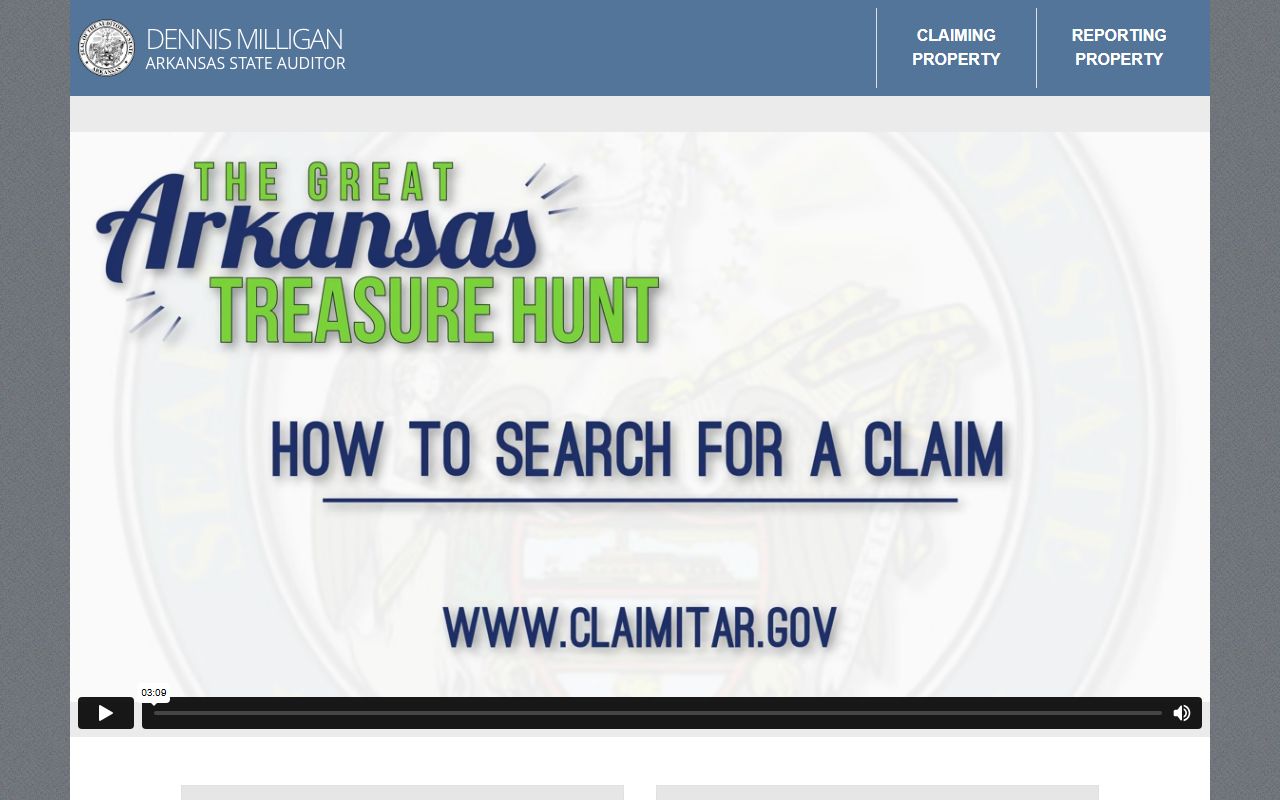
The portal handles online claim submission, document uploads, and real-time status tracking through the case number sent at the time of filing.
Types of Arkansas Unclaimed Property
Most unclaimed money in Arkansas is cash or near-cash assets that got separated from their owners through ordinary life events. People move and forget to update their addresses with a bank or insurer. Employers close and leave paychecks uncashed. Insurance companies can't locate the named beneficiary after the policyholder dies. Banks hold accounts with no activity for years before turning them over. These things add up, which is why the state now holds more than one million separate properties worth over $400 million.
Tangible items also end up with the state. Safe deposit boxes that go unpaid transfer to the Auditor's office along with their contents. The vault at the Victory Building holds everything from vintage jewelry and coins to legal documents and personal letters. A THV11 report described items like autographed baseballs, World War II love letters written by a Marine to his girlfriend in 1942, and even cremated remains, which are handled through the Arkansas State Crime Lab. Staff actively search public records and social media to find the owner or next of kin before any items are considered for auction. State law allows for annual auctions of tangible property when vault space is limited and owners cannot be found after extensive outreach.
Here are the main categories of unclaimed property the Auditor holds:
- Dormant checking and savings accounts
- Unclaimed utility deposits and refunds
- Life insurance proceeds with missing beneficiaries
- Stock shares, mutual funds, and uncashed dividends
- Contents from abandoned safe deposit boxes
- Uncashed payroll, vendor, and court distribution checks
- Mineral rights proceeds
A THV11 news segment gave viewers a behind-the-scenes look at the Auditor's vault and the variety of items stored there waiting for their rightful owners.
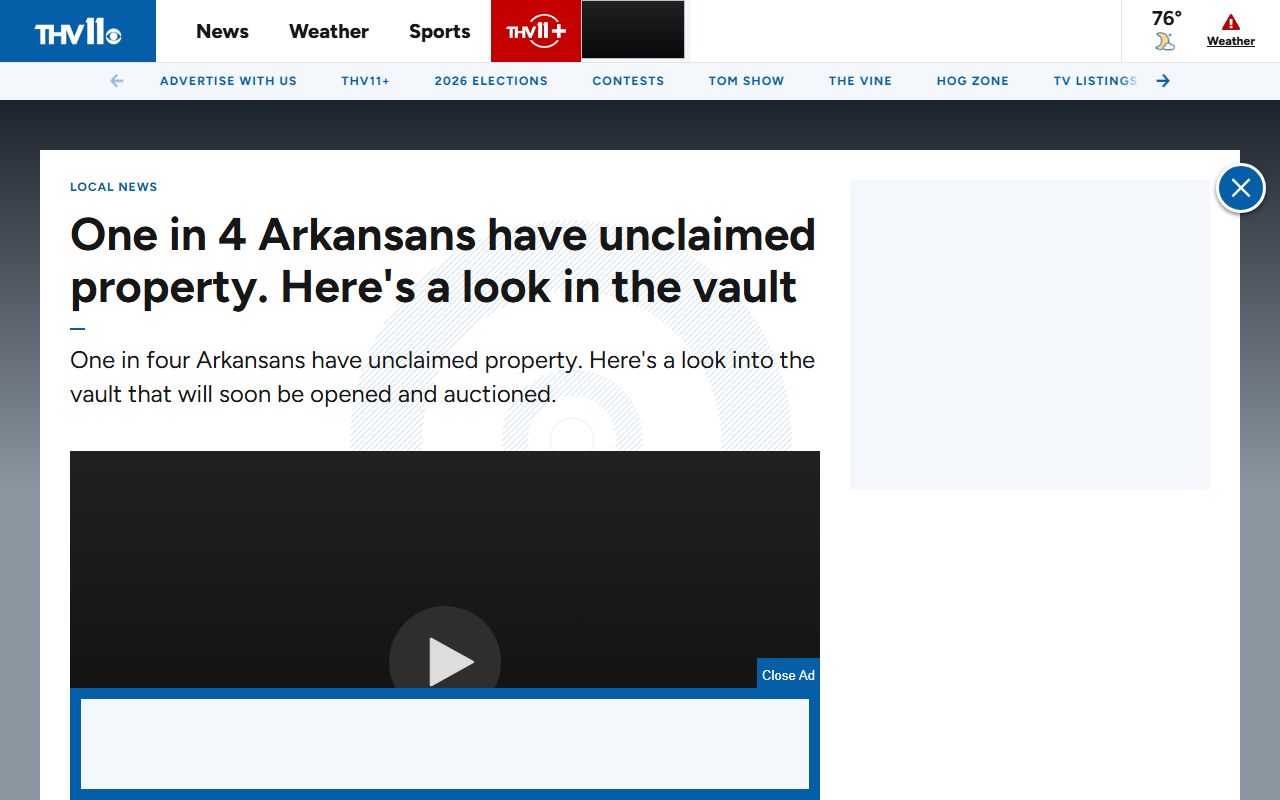
Approved cash claims are typically paid within 7 to 10 days after the state verifies the documents. The online filing process itself takes only a few minutes.
Arkansas Unclaimed Money Laws
The legal framework for unclaimed money in Arkansas is the Unclaimed Property Act, codified at A.C.A. §§ 18-28-201 through 18-28-230. This statute defines who qualifies as a holder, what types of property are covered, how long before property is presumed abandoned, and what the state does after it receives the funds. The law is custodial. The state does not take ownership. It holds property in trust until a valid claim comes in, and there is no expiration on that obligation.
The full text of the Arkansas Unclaimed Property Act is publicly available and covers every aspect of reporting and claiming.
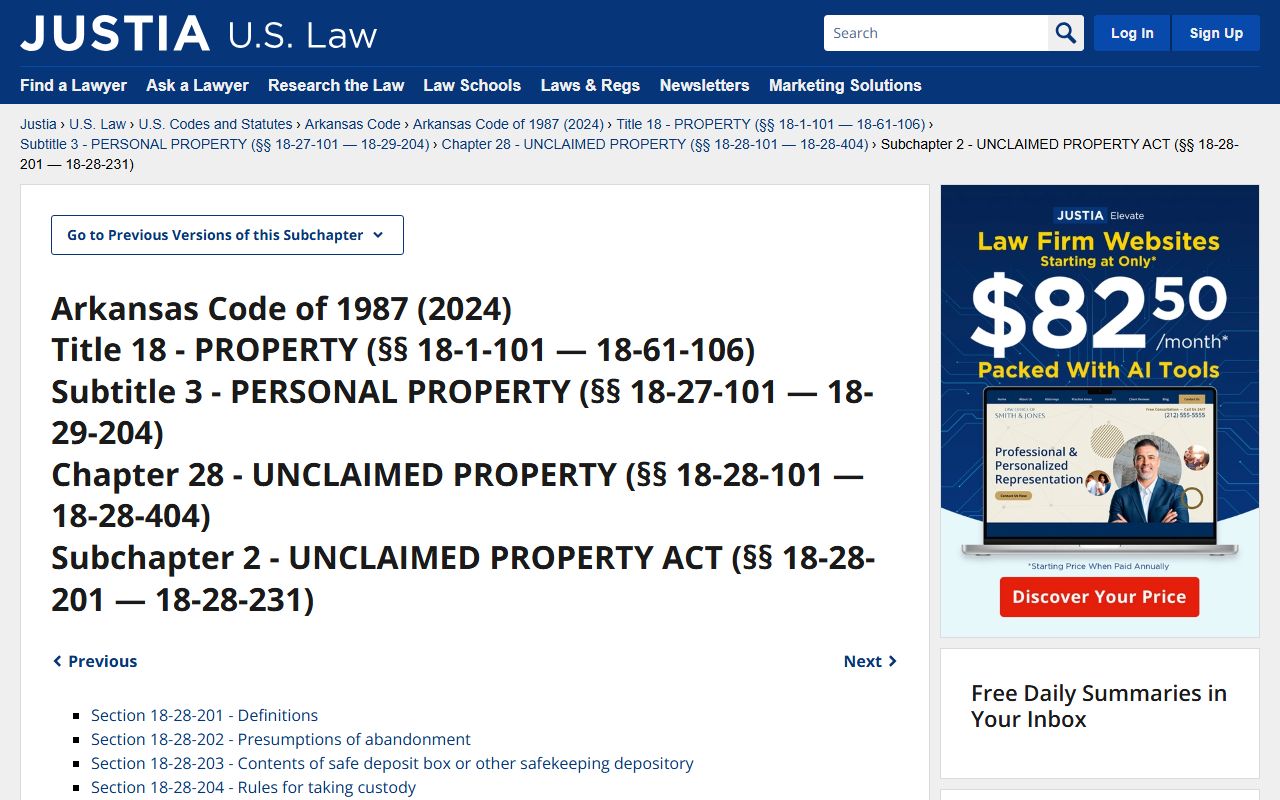
The statute makes clear that the state's obligation to return property never expires, which means old accounts or old checks are still worth searching for no matter how much time has passed.
A.C.A. § 18-28-201 defines key terms. A holder is any person or entity obligated to pay or deliver property to its owner. Banks, insurance companies, utilities, employers, courts, and government agencies all qualify as holders. Property includes any fixed and certain interest in intangible assets held in the course of business, along with all income from it. Once property meets the dormancy threshold, the holder must report it to the Auditor and remit the funds. A.C.A. § 18-28-213 addresses what happens after the state has held property for three full years without locating the owner. At that point, funds return to the county where the property originated. The county treasurer deposits them into the general fund. The county then takes on the liability for any future valid claims. Counties must keep accounting records for these transfers permanently, and any resident who can prove ownership can petition the county court to recover the funds.
Confidentiality rules at A.C.A. § 18-28-212 protect certain information contained in holder reports. This provision was amended in 2019. Record retention requirements for holders fall under A.C.A. § 18-28-207, which was updated in 2017 and requires holders to keep records for ten years after the date they filed their report.
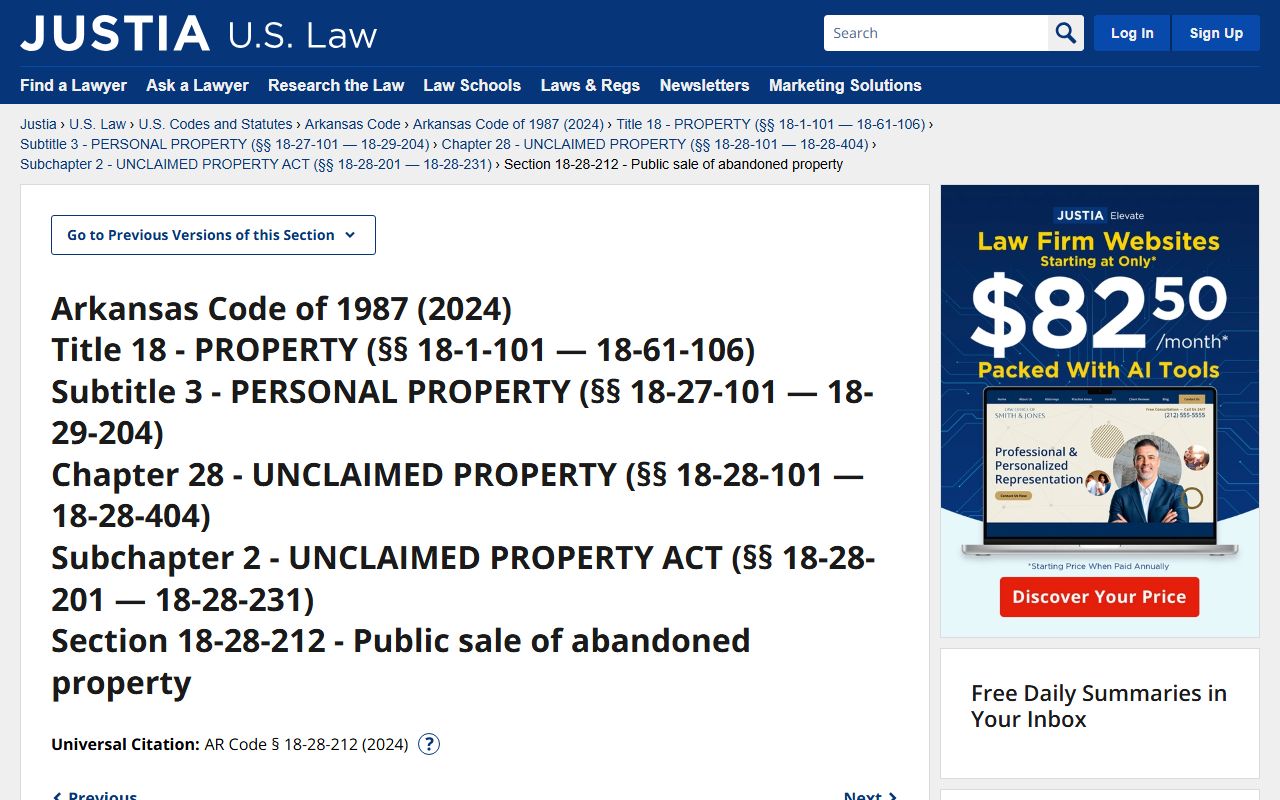
Holders that fail to maintain the required records can face compliance issues during audits conducted by the Auditor's office.
Dormancy Periods and Reporting Deadlines
Different types of unclaimed property become presumed abandoned at different points. Certificates of deposit, official bank checks, money orders, and most life insurance policies reach dormancy after three years of no owner contact. Utility deposits and utility refunds go dormant after one year. Government-issued checks, including court distribution checks, inmate refund checks, restitution checks, and warrants, also use a one-year dormancy period starting from the original issue date. Gift certificates from retail stores are specifically exempt under Arkansas law.
Holders must file annual reports and remit property to the state by November 1 each year. Life insurance companies face an earlier deadline of May 1 for both the report and payment. All filings are submitted electronically through the state's online reporting portal. Negative reports are required, meaning a business must file even if it has no unclaimed property to report that year. The NAUPA Arkansas reporting page provides full dormancy schedules, due dates, and formatting guidance for holders preparing electronic files.
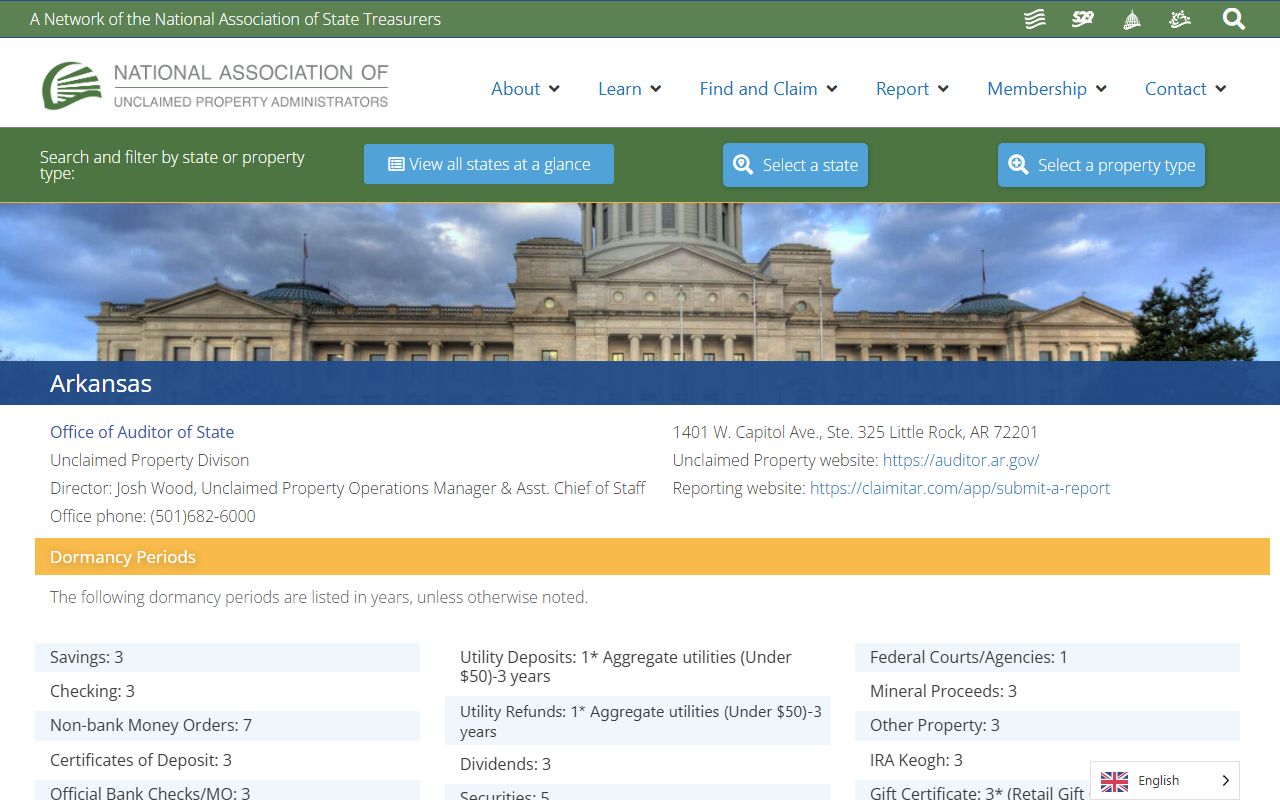
NAUPA-formatted files are accepted through the portal, and all payments are made electronically by eCheck or credit card at the time of filing.
One rule that catches many holders off guard is the reissuance trap. When a check goes stale and the holder prints a replacement, the dormancy clock does not reset. The one-year or three-year period runs from the original issue date of the first check, not the reprint date. This matters during audits. Holders who have been reissuing checks without tracking original dates can find themselves behind on their reporting obligations without knowing it. The Arkansas Counties Association treasurer FAQ addresses county-level questions about what happens when funds come back from the state and how counties handle future claims from those pools.
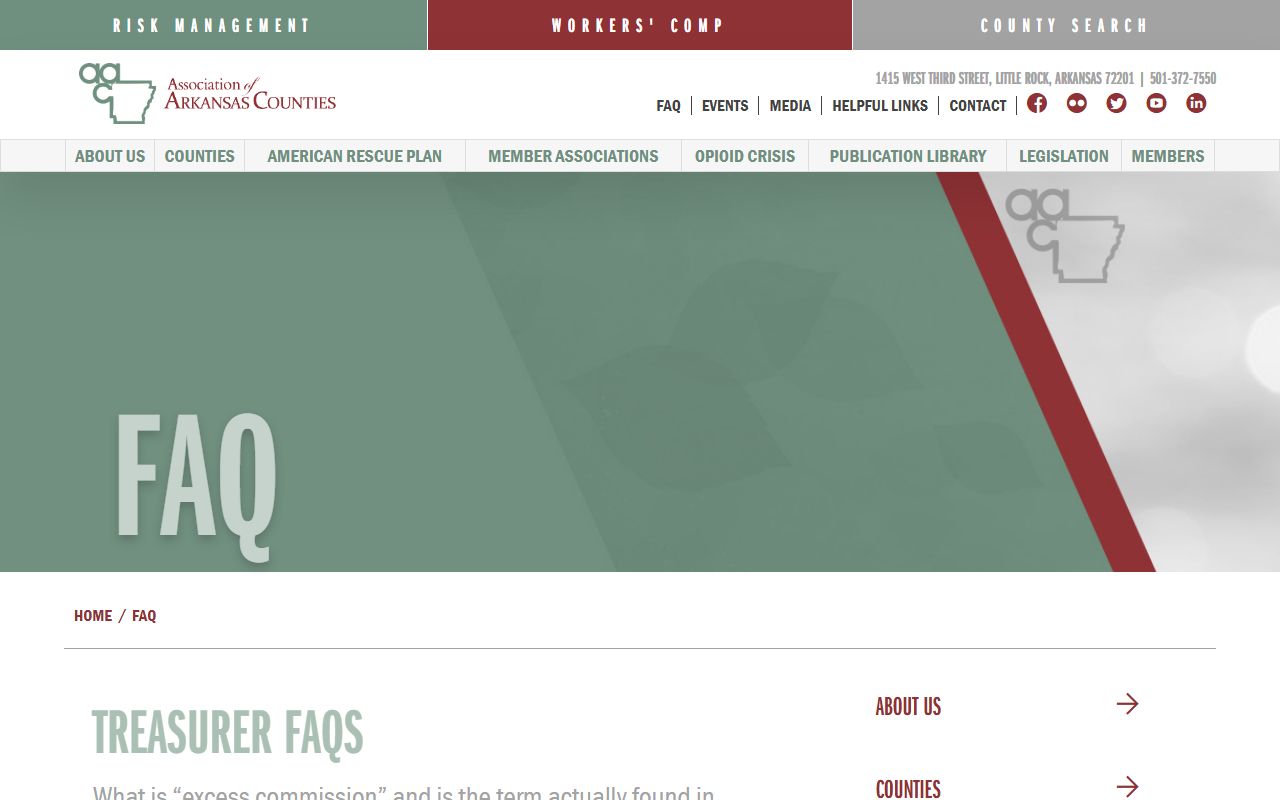
County treasurers who receive transferred funds from the state must keep permanent records and remain prepared to pay any valid claim that surfaces, even years later.
Note: If the state has already transferred your unclaimed money to the county where it originated, you may need to petition the county court directly rather than filing through claimitar.gov.
Arkansas Automatic Payment Program
Arkansas runs an automatic payment option for smaller individual claims. The program applies to claims between $50 and $5,000 for individual owners. The Auditor's office works with a contracted verification company to match owners using external databases. When a match is confirmed, the state sends a pre-notification letter to the address on file. If the letter doesn't come back as undeliverable, an automatic check goes out after a 90-day waiting period. That 90-day window exists to catch bad addresses and returned mail before the state cuts a check.
At full capacity, the program processes 5,000 to 7,000 checks per week. It was authorized by Senate Bill 14, sponsored by Sen. Dave Wallace of Leachville and Rep. Jon Milligan of Lake City. Twenty-four other states already used similar programs before Arkansas launched its version. If you receive an unexpected check from the Arkansas Auditor of State, it may be a real automatic payment. Do not discard it. The letters and checks carry official Auditor branding and a return address at 1401 W. Capitol Avenue in Little Rock.
The auto-payment program has clear limits. Heirs claiming money for a deceased person cannot use it. Businesses and nonprofit organizations do not qualify. The same applies to mineral rights claims, securities, and tangible items. All of these require the standard claim process through the portal at claimitar.gov.
Reporting Unclaimed Money as a Business
Businesses, financial institutions, and government entities that hold property belonging to others are legally required to report it to the state each year. The process starts with identifying which accounts, checks, or other assets have gone inactive for the required dormancy period. The Arkansas Government Finance Officers Association guide at arkansasgfoa.com walks holders through the full reporting process, from scoping and identifying dormant property to analyzing transactions and performing due diligence.
Due diligence is required before filing. Holders must send written notice to the owner's last known address at least 90 days before the report is due, as long as the value exceeds $50 and the address appears to be valid. That gives the owner time to respond and prevent the property from being reported. If the owner responds, the clock resets. If not, the property goes into the report. Payments are made online at the time of filing, and holders must keep their records for ten years after the filing date under A.C.A. § 18-28-207.
The Auditor's office identified a specific problem with cashier's check reporting. Banks currently hold more than $8 million in cashier's checks with no owner information attached. Many banks leave both the remitter and payee fields blank when submitting reports, making it nearly impossible to match the funds to an owner. The office has asked all banks to include both the payee and remitter names, along with any personal identification data available, when filing reports on these items.
Browse Arkansas Unclaimed Money by County
Unclaimed money in Arkansas is a statewide program, but the county where you lived or banked often determines which local resources apply to your search. Select a county below to find county-specific unclaimed property information.
Unclaimed Money in Major Arkansas Cities
Residents of major Arkansas cities can search the state database directly. Select a city below to find local unclaimed money resources and information.